Sunday, 6 December 2015

Gløgg glögg glugg

We need to talk about mulled wine. 'tis the season and it's everywhere. Unfortunately it's usually bought in a supermarket and tipped into a pan, sickly sweet with a vague hint of cinnamon.
I just had a cup at a rainy Christmas market and it was horrible. It's no wonder so many people don't like it if this is all they've ever tasted.
But it doesn't have to be this way. People who don't think they like mulled wine like my gløgg because it's properly spiced, not overly sweet and actually tastes good.


First, spice. A stick of cinnamon will not flavour anything in the ten minutes it takes to heat up the bottle. The key is lots of spices and time for the flavours to infuse.


Once you have heated the wine, along with an orange cut into quarters, keep it on the heat (not boiling) for about 15 minutes then take off the heat and leave to infuse for at least an hour.
Next, sweetness. Too much sugar and the wine is unbearable, too little and it's bitter to the taste. My advice is to see what works for you. I think my recipe is the perfect balance but your tastes may differ.
My recipe uses oranges. Dried orange peel works beautifully but it's scarce and pricey. Fresh oranges have their own sweetness, and I squeeze the juice in after infusion so cut down on the sugar accordingly.


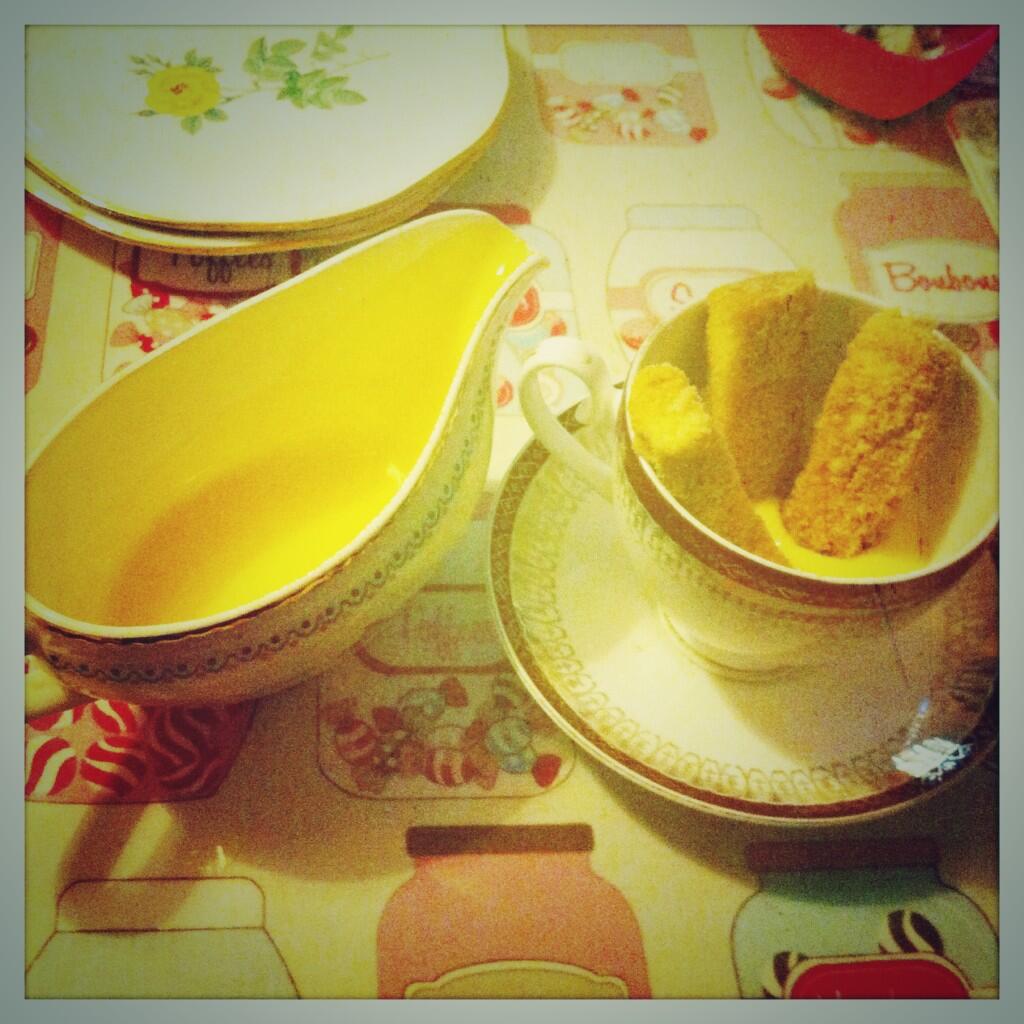
Finally, serving. The classic Danish method, and still my favourite, is to put a few port soaked almonds into the bottom of your cup, along with a good measure of the port. It adds body and you can eat the goodies afterwards. Frankly, I'd just have the port and fruit. It's really good on ice cream.

A final note about the wine: don't waste a good bottle.  This is all about the spices. For a big batch I recently made I used wine from Aldi (£2.59) and Lidl (£2.99).

Gløgg recipe (serves 4-6)

1 bottle red wine (cheap is fine)
75g sugar
1 orange, quartered
16 cloves (you can stud them into the orange if you like)
1 star anise
2-3 small cinnamon sticks or 1 large
Green cardamom pods, about 10
A handful of raisins
A handful of whole almonds
Port

Put the wine, orange, spices and sugar into the pan and heat on a medium heat, stirring until the sugar is dissolved. Make sure it doesn't boil. Keep on the heat for about 15 minutes, then switch off hob and leave for at least an hour.

Meanwhile soak some raisins and whole almonds in port. Use as much port as you like!

When the spices and orange have infused, either remove with a slotted spoon or ladle through a sieve. Squeeze in the orange juice. Reheat the wine on a medium heat. Spoon some of the almonds and raisins into your cups with a good measure of port, ladle the wine in. Serve with a teaspoon.

Skål!


Monday, 9 February 2015

Recipe: Gluten-free chocolate cherry cake

I get asked for recipes all the time so here's my Valentine's gift to you. This is a rich, fudgy chocolate cake made with non gluten containing ingredients (NGCI) that ticks all the boxes: it's rich and fudgy without being cloying, covered in ganache and tasty as you like.

I developed this for Valentine's day last year, using my favourite chocolate cake recipe as a base and working from there. Enjoy it.


Gluten Free chocolate cherry cake

200g 70-85% chocolate
200g butter
1 tbsp coffee powder dissolved in 125ml cold water or 130ml espresso
85g self-raising gluten-free flour
85g plain gluten-free flour
1/2 rounded tsp Xanthan gum
1/4 tsp bicarbonate of soda
200g light muscovado sugar
200g golden caster sugar
25g cocoa powder
3 large eggs
75ml buttermilk (or mix 50g natural yoghurt with 25ml milk)
Good quality cherry jam (sour cherry if you can find it)

For the ganache

200g dark chocolate, as above
300ml carton double cream
2tbsp caster sugar

Preset oven to 170c/150c fan/gas mark 3
Grease two 20cm/7" sandwich tins and line the bases


To bake the cake, chop up the chocolate and add to a pan with the butter and coffee. Melt slowly over a low heat, stirring occasionally. As soon as it has melted, take it off the heat.

Meanwhile mix the flours, bicarb, Xanthan gum and sugars in a large bowl. In a separate bowl or measuring jug, beat the eggs with the buttermilk/yoghurt.

Pour chocolate and egg mixtures into the dry ingredients and stir well with a wooden spoon.

When combined, divide evenly between the two baking tins. Bake for 35 -40 minutes or until a cocktail stick comes out clean. The cake will be sticky but not wet.

Leave to cool in the tin for 10 minutes then turn out onto cooling trays.

When the cake has cooled, make the ganache.

Finely chop the chocolate and put in a large bowl. Put the cream and sugar in a small pan and heat until it almost comes to the bowl. Remove from heat and pour over the chocolate. Stir the mixture until smooth and shiny.

Liberally spread the jam (I use over half a jar) on top of the bottom layer of cake and sandwich the other on top. Pour the ganache slowly over the cake, letting it run over the side. if you want, you can smooth it with a palette knife.

Leave to cool. Eat. 

Variations:

Instead of an iced cake, sandwich the cakes with fresh whipped cream and fresh fruit (I still think cherries go best with a dark chocolate) and dust with icing sugar.

If you want all chocolate then use ganache or nutella instead of jam for the sandwich.


Monday, 2 February 2015

Fame fame, fatal fame...

... it can play hideous tricks on your brain.

The main one being that in a six month period between filming and transmission, all sorts of rubbish goes on in your head. "I was a complete tit", "I made a bad joke", "I looked horrible". So come the day of broadcast, when your mum has told all her friends, everyone you know is ready to watch and there's absolutely nothing you can do about it, you end up watching from behind your hands, wondering if your only five minutes of airtime will be the most humiliating thing ever.

It wasn't. I lived. And had an entire day of people telling me how brilliant I am. I could get used to that.


Icing ninja


This is the story of what it's like to be a "member of the public" guest on an ITV daytime programme.

"Hi, I'm calling from Let's Do Lunch with Gino and Mel! We'd like to have you and your kransekake on a Christmas show. Do you watch the programme?"
"Yes" (no)
"You know who Gino diCampo is?"
"Of  course!" (no)

A week later I'm lugging a 10-layer kransekage on the tube and making my way to the huge ITV tower on the South Bank. Pictures in reception: Jeremy Kyle, This Morning, Lorraine Kelly... I'm clueless, I rarely watch TV in the day, I never watch ITV unless it's something with David Tennant in. Or Agatha Christie's Marple, I love a bit of Marple. As I'm sitting there, an arguing couple exit the lift.
Oh good god, I'm in Jeremy Kyle land. Help me!

The producers are lovely, desperate to find someone reasonably sane and friendly to fill their slot and jumping on my words like I'm the most interesting person ever. I get carried away.
"Sometimes," I say, "we put chocolate on the base of the kransekage". Production lady is over the moon. "Chocolate! Yes, that will be great". There is no chocolate on a stacked kransekage. Somehow I forget to mention it.
"And green and red icing! Because Gino's Italian and he's decorating the cake!"
Nooooo. Never. Oh, okay then.

I'm in. Filming in two weeks. We need an 18-layer cake for display, and 18-layer cake for Gino and a spare one in case things go wrong. Icing bags, flags (Italian), icing, plates, decorations. I make a list, down to the last plate, and send it to the producer.

"This is great. Can you specify how many flags you'll be bringing? Also, we've decided Mel's going to make one too so we need another cake and some English flags.

Right. Another internet order, another kilo of marzipan. We're up to four cakes.

"Hi Karen. Great news! The guest's going to join the challenge too! So we'll need another cake. He's English though so you can use the same flags.".

Right... five kransekage, That's a lot of kransekage. "Oh, and another spare!"
Six.

I'm a bit cross until I ask who the guest is. It's only Warwick "Willow" Davies. My geek brain goes a bit crazy and I'm suddenly in love with the whole thing again. TV, huh?

They send a car to pick me up, which is marvellous. Every day should start like this.
Two producers and I fight through the crowds in reception (there are only two lifts working) carrying an assortment of boxes, and I'm led through to the studio, where I dump everything on a table before being taken straight through to make up. It's 10am. We're filming at 12.30. Ish. Hopefully.

Make up is wonderful. I'm brought a coffee and offered pastries and a fantastic, cheerful lady in red lipstick and leopardskin with an astounding number of bottles sets to, finding some cheekbones I never knew I had and generally turning early-morning me into something almost unrecognisable.

In make-up

A final bit of lipstick and firm instructions for nil by mouth until filming and I'm off to sort out my cakes.

I put three uniced kranskage on to plates, arrange my already iced and almost stacked display cake and lay out the icing bags and flags. The chocolate is nowhere to be seen. There is an awful lot of waiting around as the producers and presenters do their job, set up angles, fiddle with autocues and do timings. There's a rehearsal, during which I make a mess of talking, and a pep talk. Oh, and we're not using the flags. We're definitely using the chocolate though. A runner is put on chocolate duty.

I meet Warwick Davies in the green room and manage to keep my cool by being entirely silent and completely failing to ask for the selfie I really wanted to get with him. We all watch the show start, Mel and Gino transformed from the efficient, busy professionals of earlier into sparkly smiley presenters and one by one we file in, Warwick Davies first, the cheese lady second and then finally me.

Chatting to Professor Flitwick like it ain't no thing

When I finally go on, I'm a lot more confident than in rehearsal. It goes so quickly I can hardly remember what happened. I know I shouted (I do that, I can't seem to help it) and, worst of all, made an accidental height joke at my geek hero. But then it's off set to clear up and out of the building and that's that for almost six months.

Bad education

Then it's on. My phone's broken so I borrow a lovely customer's smartphone and watch it from behind my hands with my friend Andy. He likes it, I like it, the accidental height joke is funny instead of offensive, my parents are proud. My brother puts it on YouTube and I put it on my page.

A customer emails: "I'm a little worried about the chocolate and the icing. Can you assure me you'll make a traditional kransekage?" Well yes, I reply. Of course I will. "But on the TV..."

Clearly I am willing to do anything to be on TV, like those people who eat insects in the jungle. I have no shame. I don't even care.

Fast forward two weeks and Paul Hollywood makes his kransekake on prime time BBC1. I have no idea what the man's thinking. Semolina for a start. And who on earth would cover a kransekake in red icing and green glitter? It's shocking, really.

Within two weeks there have been two kransekage on TV. Both have been wrong. One of them is my fault. I'm sorry, I really am. I promise to make only the most traditional, lovely kransekage from here on in. Unless I'm asked to be on TV again, then all bets are off.

Autographs are available on request and only a small charge for selfies. Contact my agent.

Thanks to Stacey for the screengrabs. x

Watch me gleefully sacrifice my art for fame here:
https://www.youtube.com/watch?v=1TAIvG6svVo&feature=youtu.be


Wednesday, 19 March 2014

Recipe - traditional tea loaf

In the increasingly fancy world of baking,  I'm sometimes guilty of forgetting the basics, the cakes that made me love to bake from a young age.

This is always popular in the cafe, so many people comment on it, so I'm sharing my recipe which was, of course, passed down from my mum.

Tea loaf is the first cake I learned to bake and I've been making them regularly since. Soaking the fruit in tea makes it moist and plumptious. It's open to endless adaptation, freezes well and is even dairy free. Unless you slather it in butter, which I highly recommend.

Dairy free


Not dairy free
I promise you this recipe will not fail, it's that good. Soak the fruit in the evening and the next day you'll have a cake in the oven within 15 minutes.

Ingredients

340g mixed fruit
100g glace cherries (optional)
220g dark brown sugar
240ml cold strong tea

1 egg
260g self-raising flour

Soak the fruit and sugar overnight in a large bowl. Stir well.

The next day, preheat the oven to 150°c and line a 2lb loaf tin.

Stir in the egg and flour, tip into tin, bake for about 90 minutes and bingo, a moist, tasty cake.

Serve cold, with or without butter, with a lovely cup of tea.


Sunday, 24 November 2013

Recipe: Squash and garlic soup with a kick

This week's bounty from The Village Wholefood Store was three crown prince squashes and a couple of lovely heads of organic garlic. I've never used this squash before, with its grey green skin, but cutting it open revealed the familiar sweet orange flesh which compliments so many herbs and spices.

Winter is here and a mild kick of chilli and ginger makes me feel energised and warm and full of life. You may, of course, add more if you have hotter tastes and aren't cooking for my cafe.


Soup of the week at the cafe!

Three crown prince squashes
2-3 heads garlic
Olive oil
2 onions, finely chopped
Fresh ginger according to taste, grated
Dried chilli flakes, according to taste
2 vegetable stock pots or cubes in about a litre of stock

First chop the squash into quarters and scoop out the seeds. Lay out onto two baking trays along with the cloves of garlic. No need to peel them, once roasted they will just squeeze out. Drizzle with olive oil, season with salt, pepper and chili flakes. Roast at 160 degrees for 40-50 minutes. Scoop out the flesh and put aside with the garlic.

Finely chop the onions and grate the ginger. Fry them on a medium heat in a large pot until soft then add the squash, garlic and stock. Bring to the boil, then turn down the heat, cover and simmer for 20 minutes. Taste after a few minutes and add chilli and seasoning as needed.

Liquidise the soup until smooth. If it's too thick, add a little water or stock. Serve with a swirl of chilli oil or a sprinkle of chilli if you want to heat it up, a dollop of natural yoghurt if you want to cool it down, and the bread of your choice.

Seasonal, local and sweet with a warming kick, this soup is all kinds of good.


Fish fingers and custard for non-cooks

This is a timey wimey blog, coming to you from the past, when it would have been useful, and brought to you exactly 48 hours too late.

Yesterday at my little cafe we celebrated Doctor Who Day. As part of that I made fish fingers and custard, the only snack the newly-regenerated 11th doctor wanted after eschewing apples and even - in a controversial move - bacon.


I thought I would share the "recipe" here so next time there's a day when everyone goes a bit mad over Doctor Who, and goes to the cinema at 7.30am in Australia, and screams in public at the sight of Peter Capaldi and even Ron Burgundy is involved... then you can make them.

This is a completely store-bought, no cook process which basically involves cutting things up and sticking them together. Like on Blue Peter.


"Fish fingers" and custard
Makes 12-16 depending on size of cake used.


Photo: Clare Leybourne


1 pre-made Madeira cake - I used this because it's firm and won't crumble but you can use any cake.
1/2 jar lemon curd
1/2 packet digestive biscuits
Custard

Crumble the biscuits in a food processor or blender or place in a plastic bag and bash repeatedly with a rolling pin until finely crumbed.

Cut the Madeira cakes into fish finger-shaped slabs. Cover in the lemon curd with a knife then dip into the biscuit crumbs. Gently press the crumbs onto the cakes, dip again and shake off the excess. Put on a baking tray to dry off.

Serve with custard. Job done. With the Madeira cake and lemon curd they actually taste wonderful and we're still munching on them today.

My friend took some home and made them beautiful, so I used her picture.

A proper, grown up recipe will be here shortly!

Friday, 15 November 2013

Tomato soup the good way

Well hello again, it's been ages. How have you been? You look great.

A few weeks ago I unexpectedly opened a cafe. I'm busier that I've ever been in my life, which has meant that recreational baking has gone out of the window for a while, as has blogging.

What I have to share today isn't baking at all, it's soup.

When I can I get my vegetables from a lovely little whole food store local to my cafe. Because much of their veg is grown right next door in Forty Hall Farm, you never now what you might get. And because of that, each week's soup is a seasonal surprise.This week's haul was a glut of cherry tomatoes, very ripe and calling out to be roasted.

The following soup, for which I looked at several recipes before more or less making it up, is what happened.


Roasted cherry tomato and red onion soup with basil.

Approx 1.25kg cherry tomatoes
3 large red onions
3 cloves garlic
tsp red wine vinegar (I used red wine instead)
tsp brown sugar
Olive oil
250ml vegetable stock
Fresh basil

Slice two of the red onions thinly and put in a roasting tray with the tomatoes and garlic. Drizzle with olive oil and roast at around 200 degrees for half an hour.

Heat up a couple of teaspoons of olive oil in a large pan. Add onions and cook over a medium heat for around five minutes, until the onion is soft. Stir in the sugar and wine/vinegar and cook for another minute or so, stirring constantly. Add the stock to the pan and stir in well.

Meanwhile, liquidize the tomatoes, onions and garlic along with all the juices. Add this to the pan along with some chopped fresh basil and reheat. Season to taste.

This tastes great with a handful of chopped fresh basil on the top. Alternatively parmesan goes very well. Like all soups, you can basically do what you like with this recipe. If you don't like the bits of onion, puree it up with the tomatoes. Add any other veg you have around. Or coriander instead of basil. Leave the stock out and use it as a pasta sauce. The world is your bouillabaisse.

Next week will be slightly more seasonal as I've been promised some squash. Watch this space


Wednesday, 18 September 2013

The real Scandi tower

Who saw The Great British Bake-Off last night? Other than the tragedy of me not having any biscuits in the house (and after a day of baking I wasn't about to turn the oven on again), it surprised me by being my favourite episode ever.

Quite apart from the Dalek biscuit tower - I love Doctor Who bakes - someone made a kransekage! Well, sort of. Glenn's Macaron helter-skelter was made in the pans and kind of the right shape. Which gives me the perfect opportunity to talk about what they should be like.

I cannot find a picture of Glenn's cake, despite putting writing on hold for an hour to search for one, so here's a picture of Glenn. Look at his face. I love Glenn.

© BBC

So, back to the subject: kransekage.

Kransekage is what the Danes call them, the Norwegians say Kransekake. The Swedes, for reasons unknown, don't eat them at all. They are not macarons, despite being almond based. While macarons are very light and delicate, kransekage are more solid, with a thicker "shell". More almonds, less egg white. And no flavouring: the almonds stand out for themselves. And they're far easier to stack; Glenn is either a genius or a madman, but I wouldn't try and stack macarons ever. It worked though, hats off to the man.

You can make kransekage with ground almonds, and many Scandies do, but the best way I've found is to use a base of proper Danish marzipan. I favour either Anton Berg or Odense, both of which are 60% almond. To put this into context, the marzipan we get here and use to cover cakes is around 25%. The difference is important: You couldn't make a kransekage with British marzipan, it would taste of nothing; and covering a Christmas cake in Danish marzipan doesn't work at all, it just doesn't seal the cake.

I instagrammed the ingredients because they're so pretty!


The stacked kransekage are celebration cakes: New Year, weddings, anniversaries, special birthdays. It's a testament to how much they are loved that the ex-pat Twitter community got very excited when Glenn produced those tins. We love them. You can have finger bites which taste just as good, but there's something about those stacked beauties that just makes people happy. I baked them for my son's naming day and my Mum's 60th, they were my wedding cake and my parents' Ruby anniversary cake. Every Dane I know had them at their weddings.

Despite baking them all the time, kransekage are still one of my favourite cakes. In Denmark I seek them out in all their forms and I never get bored with them. Why? Well apart from the fact that they are always a treat, they are just amazing. Soft on the inside with a not-quite-crispy crust, rich but still light, satisfying in every way. And this is what they should look like:


See? SEE? They're so TALL. And golden. Inviting you to break off a piece, bite through the crunchy icing and savour the light almonds inside.

And if that's not enough, they also come dipped in chocolate!

For a more reasoned description, I'd recommend you read my friends at Scandinavian Kitchen's blog.


Wednesday, 31 July 2013

Recipe time! Gluten-free brownies

Photo: Oli Sandler 

Some recipes I spend ages adapting and improving, or just making up from scratch. A finished product can take five or six test bakes, pages of notes and lots of tastings by friends and family until I'm happy with the result. Even recipes I've made for years sometimes get changed too - a little less ginger, a little more salt, a darker chocolate.

And some recipes come at me fully formed straight from the internet, perfect at first bake. This is one such recipe.

It's here for two reasons: firstly because I get asked for recipes a lot. When I make something that people come back for, that I feel is unique to me, I'm reluctant to give up the recipe. After all, this is my business, and giving away my best work for people to make themselves might be a little too generous. So occasionally I like to share the recipes I use and love but for which I cannot claim credit.

Secondly, I did a craft fair last week with lots of helpful and enthusiastic brownies (the girl kind, not the cake kind) and one of them, Paige, asked me for the recipe. I hope this gets passed on to her with an apology that I didn't get a chance to write it down for her there.

This recipe comes from Doves Farm and it is a great first-time gluten-free bake. The relatively small amount of flour in a brownie means there's no crumbling and no need for Xanthan gum. It both keeps and freezes well, although I'd advise not cutting it up until you're about to eat it. I love many different brownies but this is my last-minute go-to recipe.


Gluten-free brownies

Ingredients
100 g Butter
150 g Dark Chocolate
100 g Gluten Free Plain Flour
100 g Chopped Hazelnuts or Walnuts(optional)
200 g Sugar
3 Eggs
1 tsp Baking Powder


Method
Gently melt together the butter and chocolate.
In a separate bowl mix together the flour, baking powder and sugar.
Beat in the eggs followed by the melted butter and chocolate mixture.
Stir in the nuts if used.
Pour into 150 x 200mm/6"x8" oiled and lined baking dish.
Bake in a pre-heated oven for 35/40 minutes..
Cut into slices before serving.

See? Considerably easier than pie. Happy brownie making!


Tuesday, 30 July 2013

Calling gluten-free cake lovers

One of the things I like to make for cake stalls is gluten-free brownies. Simple and tasty, and a favourite at these events. These week I've also made GF courgette muffins ("Health by stealth", someone told me today).


This morning I talked to a food buyer from a small chain of coffee shops and we discussed gluten-free baking. He cannot by law accept any GF products made in a kitchen that uses regular flours and call them gluten-free.

There are three levels of gluten content in law:

1. Gluten-free - is covered by the law and applies only to food which has 20 parts per million (ppm) or less of gluten

2. Very low gluten - is covered by the law and is for foods which have between 21 and 100 ppm, but we are not yet aware of anyone using this term and because of the rules around its use, you won't see this in restaurants

3. No gluten-containing ingredients - this is not covered by the law and is for foods that are made with ingredients that don’t contain gluten and where cross contamination controls are in place. These foods will have very low levels of gluten but have not been tested to the same extent as those labelled gluten-free or very low gluten

(Taken from http://www.coeliac.org.uk)

I of course clean thoroughly before baking GF cakes but that I use regular flour in my kitchen would mean my food would be in category 3: No gluten-containing ingredients.

In this respect, it is the same as nuts. I use nuts in lots of baking, and always scrub well afterwards but the well-known packaging phrase "Cannot guarantee nut-free" always applies.

I know there are many levels of gluten-free, from coeliac to intolerance. Coeliacs have to be very careful about what they buy, those who have given up gluten for nutritional benefits less so. I only know one person who is gluten free, which is a small representative sample, so I need you!

How careful are you about buying GF products? Are you happy to buy GF baking that has been made in a non GF kitchen? Do you buy from bakers an cake stalls, and do you question the baker about what you are buying?

I will never be a gluten-free kitchen but don't feel anyone should miss out on cake. I would appreciate your input.

Now if you don't mind, I have a no-gluten-containing courgette muffin to eat.

Thursday, 21 March 2013

It's Easter...

Well, almost. So let's talk about Simnel cake.

Simnel cake, for those who might not know, is a spicy, pale fruit cake with a layer of marzipan baked into the middle and a layer on top, which is then grilled or gone over with a blowtorch. There are traditionally eleven marzipan balls on top, said to represent Jesus' disciples minus Judas. Being godless and geeky, I like to think it's one to represent each Doctor.

A Simnel cake looks like this (comedy chick in clothes optional):


Doing some research I found out a couple of things that surprised me. Simnel cake, while now associated with Easter, used to be eaten halfway through Lent - on Mother's Day, in fact, also called Refreshment Sunday. Perhaps a little break in the middle of Lent, more likely named after the point when Lent was not so much for fasting as for simply giving one thing up.

As with most traditions, the explanations vary but we do know that Simnel cake has been known of since Mediaeval times, and that the 11 marzipan balls were introduced, like so many traditions, by the Victorians.Whatever its history, though, Simnel cake is tasty. Rich and sweet, it deserves to be eaten when you're really hungry. Perfect with an afternoon cuppa, it's a lovely cake to put on the table when family and friends gather.

You can buy Simnel cakes in most independent bakeries (and please use independent bakeries when you can - the quality is always better) or, of course from Karen's Kitchen.


But it's also a rewarding cake to make. Tip everything in, give it a stir, cut out your marzipan and you're ready to go. If you fancy giving it a go, this is the recipe I favour, from the wonderful Mary Berry (and I don't wash the glace cherries!)


Here's my simplified version:

100g glacé cherries
225g butter, softened
225g light muscovado suga
r
4 large eggs
225g self-raising flour
375g mixed dried fruit
lemons, grated zest only
2 tsp ground mixed spice

450g/1lb marzipan
1-2 tbsp apricot jam, warmed

1. Preheat the oven to 150C/280F/Gas 2. Grease and line a 20cm/8in cake tin.

2. Cut the cherries into quarters and place in a bowl with all the other ingredients except the marzipan and jam. Beat well until thoroughly mixed. Pour half the mixture into the prepared tin.
3. Take one-third of the marzipan and roll it out to a circle the size of the tin and then place on top of the cake mixture. Spoon the remaining cake mixture on top and level the surface.
4. Bake in the pre-heated oven for about 2½ hours, or until well risen, evenly brown and firm to the touch. Cover with aluminium foil after one hour if the top is browning too quickly. Leave to cool in the tin for 10 minutes then turn out, peel off the parchment and finish cooling on a wire rack.
5. When the cake is cool, brush the top with a little warmed apricot jam and roll out half the remaining marzipan to fit the top. Press firmly on the top. Form the remaining marzipan into 11 balls.
6. Brush the marzipan with beaten egg and arrange the marzipan balls around the edge of the cake. Brush the tops of the balls with beaten egg and then carefully place the cake under a hot grill until the top is lightly toasted.

Give it a go, impress your loved ones. I promise you won't be disappointed.

Sunday, 17 March 2013

I should Cacao


A friend of mine recently started stocking Hasslacher's 100% cacao drinking chocolate blocks in her shop so I had to get my hands on some. And I did.

To be honest, I have no idea what to do with it. When I make hot chocolate for myself I use unsweetened cocoa powder and add sugar to taste. If I want a real treat I melt down 80% chocolate and use that instead. Sometimes I add a sticky liqueur too - Kahlua is best, Tia Maria works well too. So I knew I could use the cacao for hot chocolate. But what I wanted was a way to make it work in baking.

This is the product:


It's made to appeal to people like me. Wrapped in wax paper, lovely graphics, produced in Colombia by the growers themselves. A happy package of feelgood chocolate.

The first thing I wanted to find out was how it differs from cocoa. I came across an excellent, non conclusive, argument here. After quite an extensive search, I still haven't come up with an answer. Is the cocoa powder I use at home (Bournville as a rule, Green & Black's if it's on offer) the same? The only conclusion I could draw is that it's basically the same. 

I gave it a go in butter icing, a simple experiment. I usually use sifted cocoa powder but sometimes use melted 80% chocolate instead. I had convinced myself that the chocolate gives a richer taste than the cocoa in both icing and cakes but I think it's the added fat of the chocolate rather than the taste that makes it so. The cacao, I thought would add the richness without the extra sweetness. It did, but I could find no difference to cocoa powder.


So cheer myself up, I melted two squares, added milk and two teaspoons of demerara sugar, stirred it up, gave it a whizz with the aerolatte and had the most amazing cup of hot chocolate ever. This IS different to cocoa power and to 80% chocolate. It's bitter like coffee. Enjoyably sweet to to drink but with that satisfying backnote that coffee provides. 

For that reason alone I love this and will buy more when I'm out. As for baking, I'm not giving up. Next time I have an excuse to make cakes I'll do two separate ones and take the taste test. I'm also going to try a ganache and a much richer chocolate icing. A baking friend is going to try using chunks in cookies, and another makes it into hot chocolate with coconut milk. 

I'll keep you posted. Now, where did I put the mini marshmallows?


Find me on Facebook


Sunday, 2 December 2012

Welcome to Karen's Kitchen, incorporating my cakes and my Barnet Baker blog. I'm still in the process of building this blog so please bear with me while I get it sorted,.

Eventually I intend to have pages for each of the kinds of cakes I bake, along with price lists. In the meantime you can contact me on the following:

T: 07818 405501
E: karenskitchen2@yahoo.co.uk
F: www.facebook.com/thisiskarenskitchen
T: @karensskitchen


Pages will go up as they are filled. Currently working: The Barnet Baker, and Kransekage.

Please enjoy these pictures while you wait!


Monday, 17 September 2012

Why fairy cakes win


Note: The cakes shown on this blog are not new to anyone who knows my work. However, this article is here to kick of National Cupcake week. Over the next week I'll be making new cupcakes every day and putting them up on www.facebook.com/thisiskarenskitchen. I'll be blogging about my week of cakes (with pictures) next week.


I recently had a strange experience: I saw a display of cupcakes that didn't make me hungry. This is very rare for any cake - most of them look appetising to me - and I set about working out why. It could have been the thick chocolate icing and glitter making them look slightly mucky, or the fact they had clearly been rushed in finishing. But what was really offputting was the size of them.

When I was young, we make fairy cakes: small, fun cakes that were perfect with a beaker of milk. Then muffins came to town. Compared to fairy cakes, muffins are huge but then they can be: they are made with oil, not butter, they are far less sweet and they are not covered in icing.

When did the cupcake become the size of a muffin? There is a general feeling with cakes that bigger is better but that's not true. With a small iced fairy cake in front of me I feel I'm in for a treat, with a giant muffin-sized one I feel intimidated. If I want a large cake I'll go for a slice of something: Carrot cake, for example, or Victoria sponge. A cupcake, on the other hand, should be small but perfectly formed, indulgent but not excessive.


If I use an American cupcake recipe, I always get almost 50% extra from the mix. I can only assume that American cupcakes are either muffin sized or significantly larger - can anyone shed any light on this for me? A rudimentary web search on the difference between the two seems to reach a consensus that they are the same just with different names. However, many people claim cupcakes are larger than fairy cakes. My favourite answer was: one is made by Americans, the other by fairies.

This is why fairy cakes are better:

1. Cakes are very sweet. It may seem obvious, but too much will leave you feeling full, queasy and dehydrated. A cupcake you can hold in your hand and eat in three bites will make you happy and satisfied without bad after effects.

2. You can go mad with the toppings. On a large cake, the prospect of so much sugar is terrifying. On a small one, it's wonderful. A tall swirl of icing on a fairy cake is still edible. Simple decoration looks better, and fancy decoration more impressive.


3. You can make more. 12 large cupcakes or 18 fairy cakes? I know what I'm going for. Everything looks better in large quantities, and design-wise they are far more pleasant to look at. Plus, you can feed more people, and no-one feels bad eating two. In fact, with a large cupcake, nobody will want to eat two.

4. When doing fondant icing for a picture cake, you can decorate on top of the cake and the icing becomes king. These Pac-Man cakes look like a picture, not a big pile of cakes. The fondant is thick but the cake is the right size to make a perfect combination of light sponge and sweet fondant.


5. Flavour. The most important aspect of any cake. I love making cakes from anything from beetroot to dark chocolate to fresh fruit. In a small cake these flavours are king - you can taste every key ingredient. In a muffin-sized cake with icing, they almost certainly just end up tasting sugary.

And in case you need any more convincing, butter icing as just that: butter. I'd hazard a guess that a fairy cake has around a teaspoon of butter on top of it, a muffin sized one about two.

So I say bring back the fairy cake. Let us have a sweet treat with our afternoon cuppa, not a massive dinner-threatening snack. A cake children can hold and eat, not one they have to dissect and lick the icing off first. Let us free ourselves from massive portions and get back to the Instagram-tinged cakes of our childhoods. Let fairy cakes rule again.


Wednesday, 5 September 2012

Marshmallow teacakes


Today I made my first attempt at marshmallow. In fact, I made teacakes.


Flicking through my recipe books to find inspiration for a friend's birthday treat, I came across these in Peyton and Byrne's British Baking. I've had this a while but never made anything from it, partly because a lot of the recipes are ones for which I already have good recipes, partly because my friend had a disappointing lunch at Oliver Peyton's St James' Park restaurant (mine was lovely) and partly because I don't find the excuse to bake new recipes as often as I'd like.


Anyhow, it's rather a lovely book with lots of traditional baking recipes in it from jammy dodgers to banana butterscotch pudding (find it here: http://www.amazon.co.uk/British-Baking-Oliver-Peyton/dp/0224086618) and the teacakes caught my eye mainly because I fancied trying something new. In fact, I'm not even much of a fan of the shop-bought version, finding them rather cloying and thick. I prefer the Danish flødeboller, which have a thin wafer base, light, uncooked filling and a very thin layer of chocolate (Try them from http://www.scandikitchen.co.uk/products/Flodeboller-x12-320g.html).
But a light biscuit, soft marshmallow (not the set one with gelatine) and melted chocolate cannot fail to tempt, and I particularly like how egg yolks and whites are both needed - that's a tidy recipe.
Can I just state here that making marshmallow is brilliant. Egg whites, sugar, syrup and vanilla essence are heated over a pan of water and whisked constantly to become frothy and light. Then an electric mixer turns it into a meringue-like substance that pipes happily onto the biscuits. It's baking alchemy of the kind I love most.
Here's the making of the marshmallow:


I failed to get a decent picture of the piles of marshmallow piped onto the biscuits but they looked ace. With smaller bases and some coconut, they would be perfect as they are.
So far so good but I was nervous about the chocolate. I'm always apprehensive about working with chocolate and usually opt for a ganache but in this case I was following the recipe exactly. I melted half the chocolate in the usual way then added the other half, finely chopped, and let it sit for 7 minutes. I couldn't see it working but it did. I suppose the temperature of freshly melted chocolate would be too much for the marshmallow so this was a good solution for the right texture without the heat. It still seemed a little cold as the chocolate covered unevenly, and didn't reach the base. It's very possibly my technique but I can't see too many ways of spooning chocolate over a biscuit.


The resultant teacakes are, erm... rustic. I would like the chocolate to have been thinner and neater but they have a satisfying home made quality nevertheless. And most importantly, they taste amazing. The marshmallow is soft and melts in your mouth, the base is light and buttery and the chocolate set but not crunchy. They are not sticky or heavy at all but light and moreish. I may well try to make them again, but better. Or I may find every other marshmallow recipe I can lay my hands on and try them instead. Either way, marshmallow is the most fun I've had in the kitchen in a while and I suggest you try it immediately.


Tuesday, 21 August 2012

Homage to a small appliance.


 My Mum bought a Kenwood Chef in the early 70s and it's been there almost all my life, mixing cake batters and pastries, mincing pork for leverpostej (Danish baked liver pate), liquidising a variety of good soups every winter.

Best of all, every year we use the fantastic shaping device on the mincing attachment to crank out hundreds of vanillekranse (those small round Danish butter cookies). The mincer is old and it slips so it takes one person to grab the attachment and pull back with all their strength while the other feeds the dough into the machine and tries to grab the long star-shaped strands shooting from the other side without squashing them. Sadly there are no photos - it's all hands on deck.

A few years ago some family friends came across the exact same model in an attic. Somehow it ended up with me and it's the best thing I own. Here it is:


A few years ago I bought a brand new dough hook and went bread mad. I think it was the rye bread that did it - not long after, my beloved Kenwood died in a cloud of smoke. After completing a triple-sized batter mix, luckily. My marriage ended the day after - it was an omen.

Things started looking up when my parents took the mixer to a man in Lincoln who replaced the motor for a nominal fee. He loved the mixer, said he was dying to get his hands on one. And my almost-40-year-old mixer was back on its feet, in a clumsy metaphor for my life.

The motor isn't brilliant: it cycles a little on certain settings, and I'm nervous about exposing it to too much pressure, but to all extents and purposes it's still going strong.

I gaze longingly at shiny new Magimixes and Kitchen Aids of course, with their curves and colours and shiny new steel. But there's something about the A901, with its straight edges and clunky appearance. It's form out of function; a reliable Land Rover to the curvy Magimix's flashy Range Rover Sport. More Tom Baker than David Tennant, it may not be as nice to look at but it's the best there has been, and it's mine.